
Practice Patience
READ JAMES 5:7-11
“Rejoice in the Lord always. I will say it again: Rejoice! Let your graciousness be known to everyone. The Lord is near. Don’t worry about anything, but in everything, through prayer and petition with thanksgiving, let your requests be made known to God. And the peace of God, which surpasses every thought, will guard your hearts and minds in Christ Jesus.”
Philippians 4:4-7
Holy Bible. Holman Christian Standard Bible, Black/Burgundy, Leathertouch, Personal Size Bible. Holman Bible Pub, 2014.
The believer’s patience is a joyful anticipation! The believer’s patience is drastically different from the world’s waiting. This patience is infused with the grace of our God’s Good News! The Jesus-follower is sure to face concerns in this life. The Jesus-follower is sure to experience more concern in life than those enslaved to the world, for the worldly person does not comprehend the depths of their bondage. As believers struggle in this life, we are to lean into the goodness of our Father God and the grace available to us through His Son, Jesus.
The life of patience produces joy. It is the life founded on the supply of God. It is the life that can endure all hardship in the sheltering arms of their sovereign provider. James’ fledgling sect of Jewish Jesus-followers were in need of this kind of encouragement. Under the political domination of Rome and religious persecution of the Pharisees, the church in Jerusalem needed empowering words to endure the climate of the times. Many contemporary believers would fair well to heed James’ advice in their own situation. Just as the planter eagerly awaits his first sprouts, buds. and bloom amid the rains of late September and early April, so does the believer wait upon the appearing of Jesus to claim His own and inaugurate His eternal kingdom. As seasons come and go at the whim of God, so also will this present reality burst forth to glory in its time.
Practice Truthfulness
READ JAMES 5:12
“Again, you have heard that it was said to our ancestors [to the ancients], You must not break your oath, but you must keep your oaths to the Lord [Lv. 19:12; Nm. 30:2; Dt. 23:21]. But I tell you, don’t take an oath at all: either by heaven, because it is God’s throne; or by the earth, because it is His footstool; or by Jerusalem, because it is the city of the great King. Neither should you swear by your head, because you cannot make a single hair white or black. But let your word ‘yes’ be ‘yes,’ and your ‘no’ be ‘no.’ Anything more than this is from the evil one.”
Matthew 5:33-37
Holy Bible. Holman Christian Standard Bible, Black/Burgundy, Leathertouch, Personal Size Bible. Holman Bible Pub, 2014.
We must be faithful to our word. This is the way of Jesus. This must also be so of His followers! Those who claim the mantle, banner and Lordship of the unique Son of God, must be virtuous, upright and filled with integrity. This is a wholeness of character. As a circle is perfect in its circuit, so should the Jesus-follower have no jagged corners of inconsistency. Out lives must be completely invested in Jesus. There is only one way to live the believing life and that is full speed ahead after Jesus and the trail He has blazed.
The Sermon on the Mount, what we have in the past referred to as the manifesto of the kingdom of God, harmonizes with James’ letter. In fact, it appears that James is quoting Jesus directly. Single-minded truthfulness stood out when Jesus proclaimed this it as a chief mark for identifying His followers. Perhaps it was a day when double-mindedness was rampant. It is true Jesus had a great deal to say in critique of the Pharisees and Sadducees with all their scribes and scholars who were constantly hung up on dogmatic minutia to the point of forsaking the heart of true religion. This command towards integrity was perhaps held in James’ memory because it affected the day-to-day application of our faith.
“Simple honesty is enough. A man should be as good as his word. If he says yes he should mean yes. If he says no he should mean no. There should be no ifs, ands, and buts qualifying the word of a Christian. We are to cultivate a spirit of self-control, self-restraint, and self-discipline. We are to be dependable, straightforward, and trustworthy. The person who is honest has no need to prop up what he says with any oath. James knew, as Jesus had taught, that there is great value in simple truth communicated through ordinary speech.”
(Valentine, p. 91)
Valentine, Foy. Layman’s Bible Book Commentary-Hebrews, James 1 & 2 Peter. Broadman Press, 1981.
Dr. Valentine’s ministry was particularly focused on the ethics in the body of Jesus. His books Christian Faith in Action, Believe and Behave, Citizenship for Christians tell the story of man concerned with belief put into practice. Valentine knew that what was believed inside must have practical ramifications on the outside as well. One of the most profound things believers can understand is that the simple truth is always better than the alternative. It is a holy and right thing when believers are transparent and down to earth. This is the way Jesus intended His followers to live.
We are told that the truth will set us free (Jn. 8:32). The truth liberates! The truth breaks chains! Truth is the key to freedom! With the truth there are no shadows or grades of darkness. The truth is light. This is the light of the Good News of Jesus. Every time we speak truth we invite Jesus into that situation and entrust Him with the outcome. If that is not freedom, I do not know what is. When we release our control and manipulation of a situation and turn it over to Jesus, freedom abounds and peace is enjoyed.
Practice Praying Always
READ JAMES 5:13-18
“When thou hast the King’s ear, speak to Him for the suffering members of His body.”
(Spurgeon, Evening – February 6th)
Spurgeon, C. H. Morning and Evening: the Classic Daily Devotional. Barbour Publishing, 2018.
American Civil War chaplain and Methodist Episcopal pastor, Edward McKendree Bounds (1835-1913), is considered one of America’s finest when it comes to the discussion and practice of prayer. He is remembered for authoring nearly a dozen books on the subject. He taught that believers “cannot do too much real praying”. This chimes well with the teaching of James (v. 16). Whether we suffer or are filled to overflowing with cheer, we are at all times to be in a state of communication with God.
In times of struggle, we call out in prayer. In times of joy, we sing out in praise. The spiritually mature should see it as their duty to tend to the needs of the sick. The elders in the local family of faith should lead in bringing these needs before God in the presence of the assembled body. The spiritually mature should invite others to participate with God in the healing and restoration of the poor, weak and separated. Spurgeon, The Prince of Preachers, compared it to the servant petitioning their King. The called-out people of God must use their privilege on behalf of the lost and the dying. Bring the plight of your neighbor before God.
“Prayer opens the way for God Himself to do His work in us and through us. Let our chief work, as God’s messengers, be intercession. In it we secure the presence and the power of God.”
(Murray, p. 46)
Bounds, E. M., et al. Prayer Is the Answer: Classic Writings on Prayer. Smith-Freeman Press, 2018.
Another giant in the study of prayer, South African minister, Andrew Murray (1828-1917), noted that when we pray humbly before God we are opening the door of our will to Him. These open doors allow God to set up emergency health clinics for the fatally sick world. This is called intercession. We are leveraging our prayer on behalf of another person. God is willing and able to more than we can ever hope for or ask (Ep. 3:20). He is sure to work through our prayers to receive those who will be grafted into the family of God on the basis of His Good News. Our good work of intercession and restoration bear testimony to this reality. This is the essence of the great commission (Mt. 28:16-20), that we might make God know to the world!
God wants Jesus-followers to concern themselves with the spiritual separateness of His image-bearers adrift in the sea of the world and believers who – having been joined to Him in faith – are those currently working out their faith in fear and trembling. It is God’s desire that we would bring those lost at sea to Him constantly. This is part of laying down our lives for our brothers and sisters in Jesus. This is the simple life of faith. The following of Jesus need not be made complicated by every wind and wave of shifting doctrine. The Good News is simply God’s provision for fallen people. God provides a bridge for people to cross in the person of Jesus that joins the sinful to the sinless. All people have been extended grace from God that they might accept Jesus and the opportunity He affords everyone to spread His provision to the world indiscriminately. This brings glory to God.
“Simple faith that trusts God in the context of a fellowship of believers is rewarded beyond any normal expectations that we might cherish. God both heals us of our sickness and forgives us of our sins. The confession of our sins to God opens our lives to God’s grace. His mercy flows freely from the open windows of heaven into any life that will acknowledge, in true repentance, personal sins and personal need for him.”
(Valentine, pp. 91-92)
Valentine, Foy. Layman’s Bible Book Commentary-Hebrews, James 1 & 2 Peter. Broadman Press, 1981.
Faith does not have to be made impenetrably dense, needlessly complex, or completely unintelligible. Faith is simple enough. It is a lifestyle activity trusting in God. Believers lean on Jesus, recognizing Him alone as the unique Son of God. To lean on Jesus we must acknowledge that we are not adequate on our own. We are unwilling to live life as we were intended to live it. We must, in fact, acknowledge that we are completely bent towards rendering harm to ourselves. Without a relationship with God, we desire – either directly or indirectly – to do things that would walk us closer to the edge of our graves. When we acknowledge our shortcomings and fall on God we exhibit simple faith.
The only way it is possible to walk through the doorway into this simple faith is by engaging in an internal conversation with God. This is no less than prayer. When we work through the phrase: “Lord, I cannot, but You can, and the only way I can is through you,” in our hearts and minds we are engaging in the means God created for communication with Him. This is prayer. Every person who places trust in God has said to Him “I can’t, but You can.” Elliot and Wayne Grudem note in Christian Beliefs: Twenty Basics Every Christian Should Know, that it is God’s desire that we “pray so that our dependence on Him can increase” (48). “As a child trusts and expects his father to provide for him,” write the Grudems “so we ought to expect, in faith, that God will provide for us”. The result of continued prayer is a deepened relationship with God as our good Father and greater love for Him and His will.
Mission: Sinner Search and Rescue
READ JAMES 5:19-20
“Behold, thou desirest truth in the inward being; therefore teach me wisdom in my secret heart.”
Psalm 51:6
Holy Bible. Revised Standard Version, Division of Christian Education, National Council of the Churches of Christ in the USA, 1973.
The truth as described by the Holman Christian Standard Bible is “integrity in the inner self” (Psalm 51:6). This is described in Scripture as the desire of God. The affections of our Good Father are bent towards our completeness of character. He wants the whole person to be brought under the rule and discipline he established at creation. This truth is a reflection of His nature. We must never let the ephemeral concept of truth allude practical application. For application, look to Jesus, for He lived this truth out among us.
We must be instructed in this alien wholeness of character. The integrity of God is incorporated into our hearts and hands through the patient teaching of God through His Holy Spirit in His Holy Scriptures. The perfect example of Jesus serves as the only foolproof life by which we may compare ourselves and gage our progress towards the desires of God. The truth transcends intellectual ascent and becomes flesh and bone through the lives of called-out Jesus-followers when they act out Jesus’ teaching in the world. In the eyes of God and the godly, Jesus-followers are counted among the wisest men and women history has known.
“Speak and act as those who will be judged by the law of freedom. For judgment is without mercy to the one who hasn’t shown mercy. Mercy triumphs over judgment.”
James 2:12-13
Holy Bible. Holman Christian Standard Bible, Black/Burgundy, Leathertouch, Personal Size Bible. Holman Bible Pub, 2014.
Inevitably, a called-out member of our immediate group of Jesus-followers will err from the built-up pathways of truth. The well trodden pathways of peace and wisdom are traded for the freeways and bypasses of the world surprisingly often among the called-out followers of Jesus. Is the community intended to sit idly by and watch their wayward compatriot drawn in the swarm of wayfarers? It is absolute foolishness to refrain from pursuit!
The tug of godly compulsion should pang our souls to see a close friend in the way of truth divert his or her track and head towards the gaping maw of destruction. Those who do not feel such a tension in their innermost person should look at the depth at which they engage with fellow believers. This apathy for the wayward can only be attributed to the callousness or superficiality of that relationship. Those who care know the joy of walking the road of faithfulness with a brother or sister. They also would know the depths of joy experienced when mercy reigns victorious over judgement as the wanderer is brought home to stay!
“How joyful is the one whose transgression is forgiven, whose sin is covered! How joyful is the man the Lord does not charge with sin and in whose spirit is no deceit.”
Psalm 32:1-2
Holy Bible Holman Christian Standard Bible, Black/Burgundy, Leathertouch, Personal Size Bible. Holman Bible Pub, 2014.
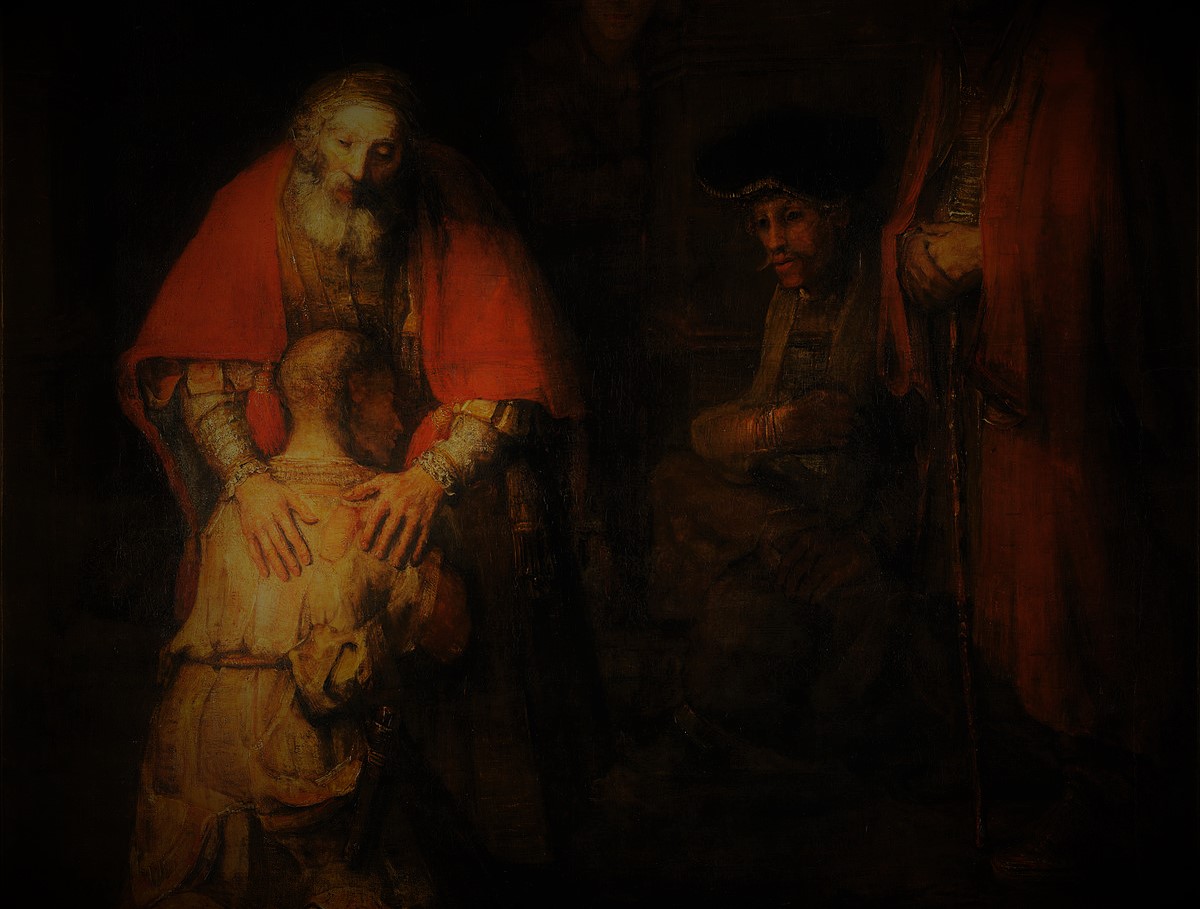
King David knew the joy of God’s forgiveness. We can participate in this truth when we bring the erring brother or sister back into the fold of God with open arms! The wisdom of King Solomon reminds us that hate “stirs up conflicts” like a spoon scraping the bottom of a scalding pot, whereas “love covers all offenses” (Pr. 10:12) like a soothing ointment or cure-all. There is no slight so severe that forgiveness cannot resolve. This homecoming is a joy for both the pursuer and the pursued with scenes of Jesus’ parables floating all around.
In his Tyndale New Testament Commentary, The Letter of James – An Introduction and Commentary, Blanchard Professor of New Testament at the Wheaton College Graduate school, Dr. Douglas J. Moo, ensures that readers avoid all speculation that any “blessing given to the faithful believers” would be “construed as a reward for his efforts” (190). However, he does note “the idea that God will treat us as we have treated others”, as it is found in the golden rule and elsewhere, “is inescapable in Scripture.” Forgiving treatment of our brothers and sisters in Jesus, points the whole world towards the same God who covered over and blotted out our faults with the blood of Jesus.
“And Peter said to them, ‘Repent, and be baptized every one of you in the name of Jesus Christ for the forgiveness of your sins; and you shall receive the gift of the Holy Spirit. For the promise is to you and to your children and to all that are far off, everyone whom the Lord our God calls to him.'”
Acts 2:38-39
Holy Bible. Revised Standard Version, Division of Christian Education, National Council of the Churches of Christ in the USA, 1973.
Those who turn or return to the local congregation of called-out Jesus-followers should be welcomed and reminded of the faith that began in them marked by their baptism. We should restore one another, reassuring each other in God’s faithfulness to save us from our sins and His willingness to cover over every past error and infraction we made against His path of truth. Jesus’ very own Spirit dwells inside of all those who trust in Him. His Holy Spirit called out to each believer through the truth of Scripture. The truth was communicated to us through word and deed, and God desires that it would benefit our lives richly.
Moo notes that oftentimes Scripture “associates salvation with the covering, the complete blotting out of sins” just as Peter claims in Acts. In his commentary on The Epistle of James, Dr. James B. Adamson, late senior pastor of First Presbyterian Church in Santa Rosa, California, highlights God’s active overlooking of sin as God choosing “in his charity not to look at it” (204). God, therefore, not only ignores our sin but intentionally chooses not to snoop for it or search it out once Jesus’ blood has been applied to it. God will never hold past sin over the heads of His children.
“Jesus Christ alone can give new life as a result of repentance and subsequent baptism.”
(Maddox, p. 31)
Maddox, Robert L. Acts. Broadman Press, 1979.
As Peter encouraged in his sermon in Acts chapter two, all true Jesus-followers will respond as they turn to Jesus and be baptized. They will subject themselves to the application of water to their person, symbolizing, in an outward expression, the invisible cleansing of their entire person from all sin past, present and future. The promise to the repentant is the Holy Spirit of God. Our fellow laborer in the Good News of Jesus is His own personal Spirit. He is our guide. He is our comforter. He is a friend who digs his heels in beside us and goes with us the extra mile. We can be sure at all times that he lifts up under every burden we bear and carries more than His share of the load. Baptism helps assure the believer that the Holy Spirit is with them. The symbol is a first act of repentance, and all who are humble before Jesus can humble themselves to water before other people.
In his Layman’s Bible Book Commentary on the book of Acts, Robert L. Maddox, retired executive director of Americans United for Separation of Church and State, makes sure that readers link repentance with baptism, as “an experience of confirmation and affirmation by the Holy Spirit” (31). In essence, the believers’ baptism is a heavenly smile from the Holy Spirit beaming down on the new Jesus-follower. God is very pleased with any human who will humble himself to die to His sins and be raised to new life in Jesus. This is the identity we must renew in the repentant wayfarer. They must be accepted and reaffirmed in the truth that they are a child of the living God. He smiles on both the repentant and the restorer.
“Remember, God is as Great as He is Good!”
Noah R. Hunt
 POIEMA: Created for Truth